
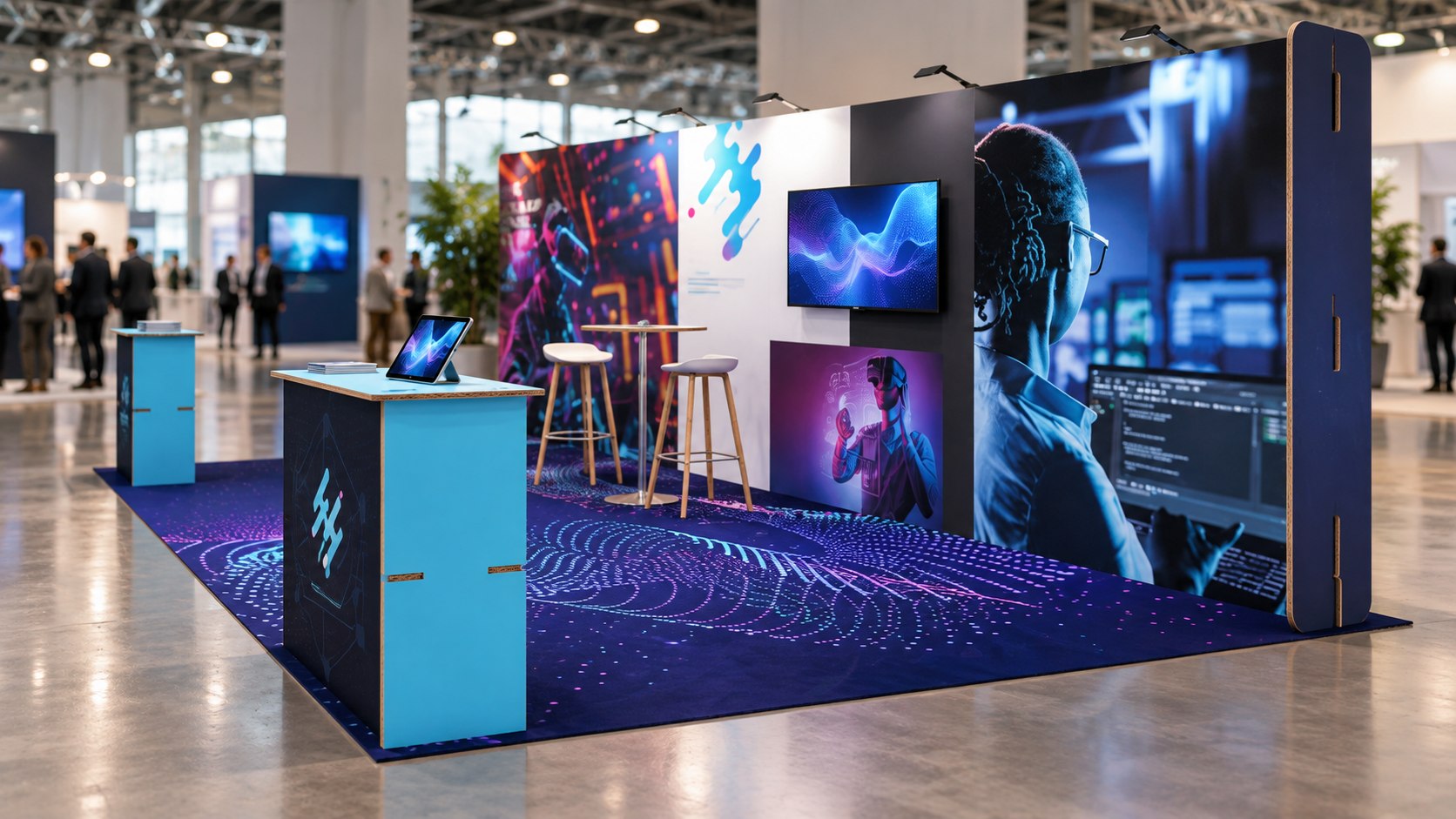
The Future of Sustainable Exhibiting: Trends Shaping Eco Stand Design in 2026
The Future of Sustainable Exhibiting: Trends Shaping Eco Stand Design in 2026
Sustainable exhibiting has moved from a nice-to-have to a tender requirement. Procurement teams ask for proof, visitors expect credible claims, and venues are tightening waste and energy rules. The upside is creative: the next wave of eco stands is smarter, lighter and more versatile than anything that came before. Here are the trends that will shape the year ahead and how to benefit from each one without adding complexity or cost.
1. Reconfigurable kits that scale across your calendar
The most cost-effective route to sustainability is to eliminate single-use thinking. Expect to see more brands standardising on a modular kit that adapts to different footprints, from compact shell schemes to island plots. Design the core once, then layer graphics and accessories for each audience.
2. Bio-based coatings and inks
Water-based inks are already standard for responsible printing. The next step is bio-based coatings that add scuff resistance without plastic films. These coatings preserve recyclability while keeping colours rich under exhibition lighting.
3. Smarter power and lighting
LED lighting and low voltage rails continue to reduce energy use. Simple motion sensors can dim accent lighting outside show hours. Expect more portable battery packs and efficient drivers that reduce draw from the venue supply.
- Use narrow-beam spots to highlight key products without over-lighting the space.
- Place lighting inside counters to create gentle glow effects that use minimal wattage.
4. Digital content, fewer handouts
Younger audiences prefer QR codes and short videos to printed brochures. This saves weight and removes end-of-day waste. A single freestanding graphic with a QR link to specs, pricing and case studies can replace boxes of printed literature.
5. Honest claims and third-party validation
Audiences are sceptical of vague eco language. Brands will publish clearer metrics: total material weight, percentage recycled content, expected reuse cycles and the method for end-of-life. The most confident exhibitors will invite post-show audits or provide a recycling certificate for each event.
6. Circularity by default
From mono-material structures to paper-based tapes, the default approach will be to design so that every component can re-enter the recycling stream. Simpler bill-of-materials make kits cheaper to produce and easier to maintain.
7. Aesthetic minimalism that reads premium
Minimalist forms, generous white space and single bold messages do more with less. This aesthetic supports circular goals because it avoids decorative parts and mixed materials that complicate recycling.
How to put these trends into action
- Audit your current kit. List materials, weights and non-recyclable elements to replace.
- Create a reconfiguration map for your top three venue footprints.
- Standardise graphics sizes so campaign changes do not trigger structural waste.
- Define an end-of-life protocol and include it in the crate.
Simple, documented steps beat complex one-off builds every time.
Related reading
- Designing an Eye-Catching Exhibition Stand with Sustainable Principles
- 5 Ways to Make Your Exhibition Stand More Eco-Friendly
- Eco-Friendly Venue Choices: What to Look for in a Green Exhibition Space
- ROI of Going Green: How Sustainable Exhibition Stands Attract High-Value Clients
Next steps
Book a quick call with EcoStands Green to map a reconfigurable, fully recyclable kit for 2026. We will help you reduce waste, cut logistics costs and present a credible sustainability story.
Frequently asked questions
Is a cardboard stand strong enough? Yes. With engineered cores, smart folds and correct loading, counters and walls are robust for typical trade show use.
Can I add screens and shelving? Yes. Use designed-in mounting points and spread loads with backing plates. Keep accessories detachable so the main structure stays mono-material.
What about moisture or spills? Stands use coatings that resist light moisture. As with any premium display, wipe spills promptly and store in dry conditions.
How do I brief my team? Include a one-page pack list, a build guide and a link to a short video. Clear labelling removes confusion and keeps the kit in circulation longer.
Practical checklist
- Confirm recycled content and recycling compatibility in your purchase order.
- Specify water-based inks and non-laminate finishes.
- Label all parts and protect edges.
- Flat-pack for transport and provide a repack guide.
- Track reuses and record end-of-life volumes.