
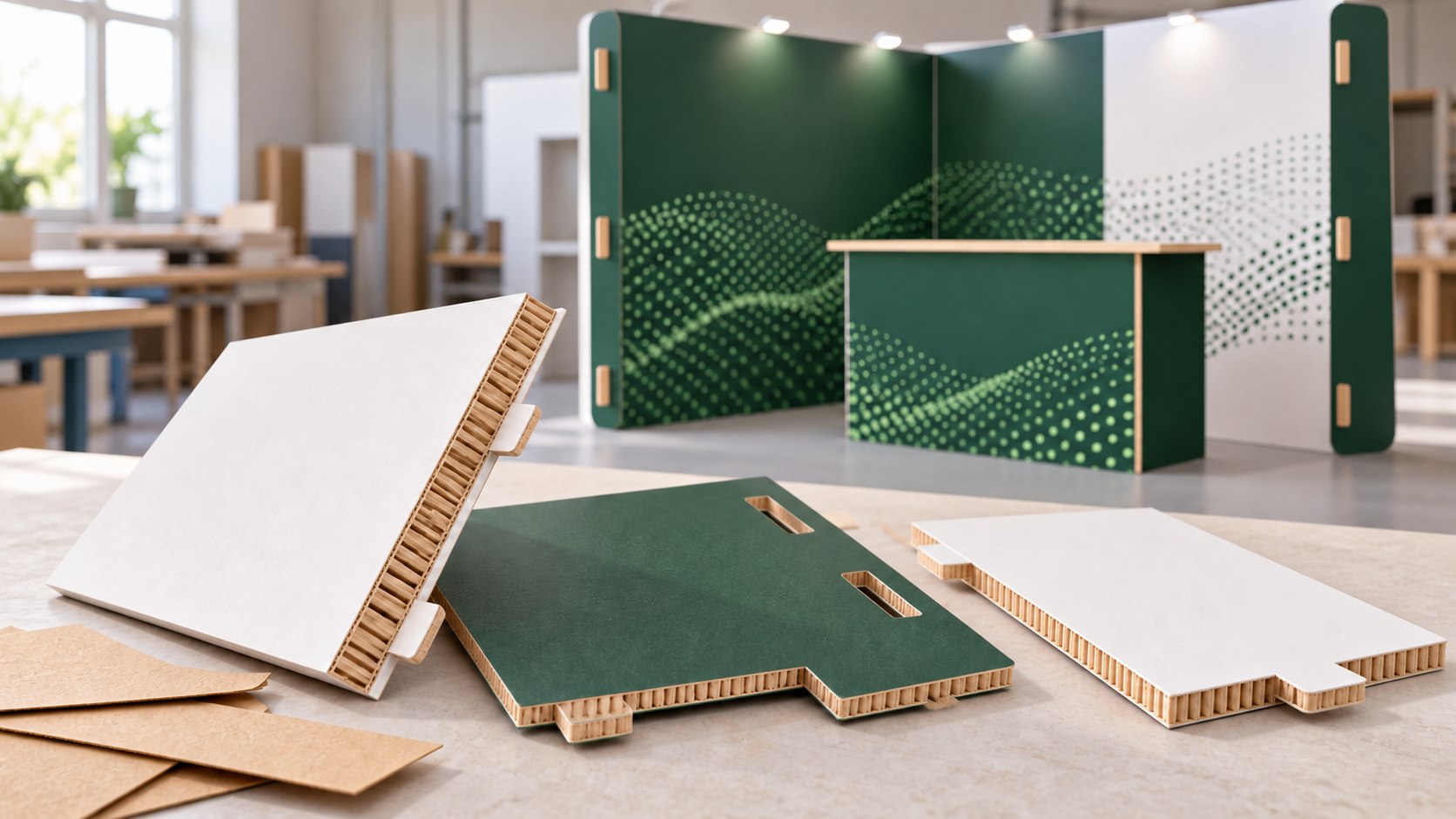
From Waste to Display: How Cardboard Becomes a Sustainable Exhibition Stand
From Waste to Display: How Cardboard Becomes a Sustainable Exhibition Stand
Most exhibitors know cardboard is recyclable, but fewer understand the fascinating journey that turns used fibre into a premium, high-strength stand you can build in hours and recycle again later. This story starts at the kerbside and ends on the show floor, with smart engineering along the way. Understanding the process helps teams make better specifications, set the right expectations with stakeholders, and communicate clear sustainability benefits on the stand itself.
1. Collection and sorting of fibre
Households and businesses put mixed paper and card into recycling streams that go to a materials recovery facility. Optical scanners and human quality checks separate grades and remove contaminants such as plastics and staples. Clean, consistent feedstock improves print quality later and increases structural strength.
- Prioritise suppliers who publish recycled content percentages.
- Ask for confirmation that boards are compatible with municipal recycling after use.
2. Pulping, cleaning and sheet formation
Recovered fibre is pulped with water, screened and de-inked. The clean pulp is then formed into sheets on a moving wire, pressed to remove water, and dried. Engineers control thickness, density and stiffness to achieve the performance needed for load-bearing counters and walls.
3. Engineered cores and structural design
Stand components use smart geometries. Honeycomb, flute, or sandwich constructions deliver high strength with low weight. When combined with folded edges, a cardboard counter can support heavy literature and product samples while remaining easy to lift and carry.
- Use corner folds and double layers where knocks are likely.
- Design large panels with internal ribs so they do not bow under lighting or screens.
4. Printing with low-impact inks
Modern digital presses achieve vibrant, consistent colour using water-based inks. Colour profiles bring brand palettes to life without plastic laminates. Where scuff resistance is needed, specify matte aqueous coatings that remain compatible with recycling.
5. Cutting, creasing and kitting
CNC cutters crease and cut components to fine tolerances. Every item is labelled so crew members can assemble quickly without tools. Packs include a simple walkthrough with images and a QR code linking to a build video.
- Kits should include spare edge protectors and a small repair pack.
- Include a transport manifest so logistics teams know exact weights and volumes.
6. Transport and build with minimal emissions
Flat-packed kits reduce cubic volume dramatically compared to timber frames. That means fewer pallets, smaller vehicles and faster, safer manual handling on site. Build times drop, labour bills fall, and the stand is ready for visitors sooner.
7. The second, third and fourth life
Great stands rarely retire after a single outing. Reuse is where cardboard shines. Replace only the graphics for campaign changes while keeping structures identical. After many cycles, components that are worn go into a clearly marked recycling stream, closing the loop.
Communicating the story at your stand
Visitors love a clear sustainability narrative. A single A5 placard or small panel can outline the journey from waste to display in plain language. This transparency builds trust and turns the stand into a talking point for sales teams.
Data points marketers can use
- Transport weight reductions compared to MDF builds.
- Average build time saved per show.
- Number of reuses before components are replaced.
- Percentage of the kit that is widely recyclable.
These numbers support tenders and ESG reporting and they give procurement teams the confidence to choose your brand.
Related reading
- Sustainable Exhibition Waste Management: Reducing, Reusing, and Recycling
- What Makes an Exhibition Stand Truly Sustainable?
- Lighting Solutions for Eco-Friendly Exhibition Stands
- How to Run a Sustainable Exhibition
Next steps
Want to tell this story at your next event? We can print a small sustainability panel for your kit and supply data points tailored to your build and transport plan.
Frequently asked questions
Is a cardboard stand strong enough? Yes. With engineered cores, smart folds and correct loading, counters and walls are robust for typical trade show use.
Can I add screens and shelving? Yes. Use designed-in mounting points and spread loads with backing plates. Keep accessories detachable so the main structure stays mono-material.
What about moisture or spills? Stands use coatings that resist light moisture. As with any premium display, wipe spills promptly and store in dry conditions.
How do I brief my team? Include a one-page pack list, a build guide and a link to a short video. Clear labelling removes confusion and keeps the kit in circulation longer.
Practical checklist
- Confirm recycled content and recycling compatibility in your purchase order.
- Specify water-based inks and non-laminate finishes.
- Label all parts and protect edges.
- Flat-pack for transport and provide a repack guide.
- Track reuses and record end-of-life volumes.